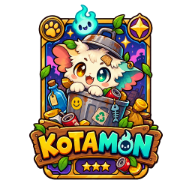
KOTAMON Cereal Box Card Guide: Find Foil Collectibles and Improve Their Value
Learn how the KOTAMON cereal box card works, where the foil collectible fits, and how to manage condition, color sets, repairs, and swaps.
What the KOTAMON Cereal Box Card Means
A kotamon cereal box card is one of the most exciting finds in KOTAMON's collection loop: an unopened cereal box may contain a super-rare foil collectible. That makes the kotamon cereal box card important for more than rarity, because the game also ties a card's value to its physical condition. In KOTAMON, you search a dump site, uncover discarded treasures, complete requests, and build a collection of illustrated cards.
The official KOTAMON game page on Steam describes a relaxed, single-player simulation built around trash sorting and collecting. The game includes dozens of unique cards, color-based collection sets, card repair, and card swapping. The cereal box is therefore part of a larger progression system rather than an isolated easter egg.
| Game element | What is confirmed | Practical takeaway |
|---|---|---|
| Unopened cereal box | It can contain a super-rare foil card when you get lucky | Inspect boxes instead of treating them as ordinary trash |
| Card collection | KOTAMON includes dozens of unique cards with hand-drawn artwork | Keep a personal list of cards you have found |
| Color sets | Completing sets of different colors provides rewards | Track missing colors as well as card names |
| Card condition | Cards may be crumpled, damaged, or torn, and can be mended or swapped | Do not discard damaged cards immediately |
| Hidden treasures | Other valuable objects can be found at the dump site | Search for more than cards during each session |
The wording around the cereal box is important. The available information presents the foil card as a lucky discovery, not a guaranteed reward from every box. It also does not provide an exact drop rate, a fixed map location, or a universal price list for individual cards.
How to Find a kotamon cereal box card
The confirmed search method starts with the dump site. KOTAMON asks you to sift through discarded material, look for interesting objects, and collect anything that helps your overall progress. The official description also emphasizes that the game is laid-back, so a careful search is more appropriate than rushing through every pile.
When a kotamon cereal box card turns up, evaluate it in two stages. First, determine what you found: a regular collectible, a missing set piece, or a super-rare foil card. Next, check its condition. A rare card in poor shape may need a different decision from a less rare card that completes an important color set.
| Search stage | Recommended action | Why it matters |
|---|---|---|
| 1. Enter the dump site | Search the available trash and discarded objects methodically | Cards and other hidden finds are part of the same search loop |
| 2. Inspect packaging | Pay attention to unopened cereal boxes | A box can hide a foil collectible |
| 3. Examine the card | Note its artwork, color, rarity clues, and physical condition | These details determine how it fits your collection |
| 4. Mark damaged finds | Separate crumpled, damaged, or torn cards in your notes | They may be repairable or useful in a swap |
| 5. Check your collection | Compare the find with your missing color sets | Set completion can produce rewards |
| 6. Continue other objectives | Complete dump-site requests and look for hidden treasures | A card hunt does not have to be your only goal |
A useful routine is to search one section carefully before moving on. Scan loose objects, packaging, and larger trash piles rather than assuming that only obvious card-shaped items matter. If you find a cereal box, treat it as a possible card container, not as proof that a foil card is inside.
The supplied material does not establish a special route for finding the box. That means the safest strategy is consistent searching and good collection management rather than chasing an unverified shortcut.
| Question | Evidence-supported answer | What not to assume |
|---|---|---|
| Where is the box found? | During the dump-site search | A specific pile or map coordinate is guaranteed |
| How often does it appear? | The description uses chance-based wording | An exact spawn percentage |
| Does every box contain foil? | No guarantee is stated | Every unopened box produces the rarest card |
| What makes a card valuable? | Rarity and better physical condition are relevant | Every foil card has the same value |
| Can poor condition be fixed? | Cards can be mended or swapped | A damaged card is automatically worthless |
Any fixed route or percentage mentioned in a player experience or community report should be treated as anecdotal unless it is confirmed by an official update. The current reference material supports the general search loop, but not a guaranteed farming method.
Card Condition and Value Strategy
KOTAMON's card system has two separate considerations: what the card is and what state it is in. The cereal box creates an opportunity to find a super-rare foil card, while the repair system gives condition a direct role in the card's price. The official description explains that cards in better condition are more expensive.
Treat each kotamon cereal box card as a two-part find. Its rarity may make it desirable, but its condition can affect how much it is worth inside the game. The available sources do not provide exact prices, so a rarity label alone should not lead you to assign a specific value.
| Card situation | Supported game detail | Recommended response |
|---|---|---|
| Unopened cereal box | It may contain a super-rare foil card | Inspect it before moving on |
| Super-rare foil card | It is presented as an unusually valuable collectible | Preserve it and compare it with your collection goals |
| Card in good condition | Better condition increases card expense | Prioritize keeping it when it fills a set gap |
| Crumpled card | Cards can be damaged by their environment | Consider mending before swapping |
| Damaged card | Repair and exchange are available options | Check whether it is a unique or needed card |
| Torn card pieces | Even severely damaged cards may be mendable or swappable | Evaluate repair before discarding |
| Card needed for a color set | Color sets provide rewards | Keep it unless a clearly better replacement is available |
Use the following decision order whenever you find a card:
- Check whether it fills a collection gap. A card that completes a color set may be more useful than a higher-condition duplicate.
- Protect rare or unusual finds. A foil card should receive extra attention because the game identifies it as super-rare.
- Repair before abandoning. Crumpled, damaged, and torn cards have an established repair path.
- Compare before swapping. If the game offers a better version, consider whether the exchange improves condition or advances a set.
- Avoid guessing at prices. Without an item-by-item value list, use condition, rarity, and collection progress as your decision signals.
This approach keeps the card hunt flexible. You do not need to choose between collecting and earning value immediately. A damaged card can become a repair project, while a stronger version can later improve the quality of your collection through the swap system.
Build a Completionist Collection Plan
For a kotamon cereal box card collector, a simple checklist can prevent valuable finds from being forgotten. The game contains dozens of unique cards, and relying on memory becomes difficult once you start managing different colors and conditions.
Use a notes app, spreadsheet, or paper list. The goal is not to recreate an in-game interface; it is to record enough information to make the next decision quickly.
| Tracking field | Example entry | Decision it supports |
|---|---|---|
| Card identity | The exact name shown in KOTAMON | Prevents confusion between similar illustrations |
| Color | The card's displayed set color | Shows which rewards are closest |
| Find details | Foil, loose card, or cereal-box discovery | Helps you remember why the card matters |
| Condition | Good, crumpled, damaged, or torn | Indicates whether repair may be worthwhile |
| Collection status | Needed, already covered, or set complete | Clarifies whether to keep or exchange it |
| Next action | Keep, mend, or swap | Turns a discovery into a concrete plan |
A practical collection plan can follow five rules:
- Search for volume, not a promised drop. Since the sources give no box location or drop percentage, build progress through repeated, careful dump-site searches.
- Prioritize color-set gaps. A card that moves a set toward completion may offer more immediate progress than a visually appealing card you already have covered.
- Preserve high-condition cards. The game's value system favors better condition, so avoid unnecessary swaps involving your strongest copies.
- Repair meaningful damaged cards. A torn or crumpled card may still be worth keeping if it is rare or completes a set.
- Use the wider game loop. The dump-site owner pays for hidden treasures, and character upgrades improve your ability to clear garbage efficiently. Card collecting can progress alongside those objectives.
Upgrades are especially useful when searching becomes repetitive. KOTAMON describes improvements that make the character better, faster, stronger, and more efficient at clearing garbage. The supplied information does not list exact upgrade costs or numerical bonuses, so choose upgrades according to your own player experience and the part of the search that feels slowest.
The game also lists 40 Steam achievements. For completionists, that creates a second long-term goal alongside the card collection. You can track achievements separately while using your card checklist to monitor foil discoveries, repairs, color sets, and swaps.
The central lesson is simple: do not measure a successful session only by whether you found a foil. A session can still move forward when you discover a damaged card worth repairing, complete a color set, finish an owner's request, or uncover another hidden treasure.
FAQ: kotamon cereal box card
Where can I find a kotamon cereal box card?
Search through the dump site and inspect discarded objects, including unopened cereal boxes. The available game information says a box can contain a super-rare foil card when you are lucky, but it does not identify a guaranteed location or route.
Does every cereal box contain a foil card?
No confirmed source says that every box contains one. The official description presents the foil as a chance discovery. Treat each unopened box as a potential find rather than a guaranteed reward.
Does card condition affect value in KOTAMON?
Yes. KOTAMON states that cards can be crumpled, damaged, or torn and that better-condition cards are more expensive. Damaged cards can be mended or swapped, so poor condition does not necessarily mean the card should be discarded.
Should I mend or swap a cereal box card?
Keep a rare card or one that fills a color-set gap unless you have a clear reason to exchange it. Mend damaged cards when they are important to your collection, and consider swapping when a better-condition version would improve your progress.
Related Guides
KOTAMON All Cards Guide: Find, Repair, and Complete the Collection
Use this KOTAMON all cards guide to organize your search, repair damaged finds, target foil cards, and complete color-based sets.
KOTAMON card collection guide: Find, Repair, Trade, and Complete Every Set
Build your KOTAMON card collection with practical tips for trash-site searches, set rewards, repairs, swaps, foil finds, and upgrades.
KOTAMON Card Game Guide: How the Trash-Sorting Collection Works
Looking for a kotamon card game guide? Learn KOTAMON's trash-sorting loop, card condition, repairs, swaps, foil finds, and early upgrade priorities.
KOTAMON Card Locations: Where to Find Cards and Foils
Searching for kotamon card locations? Learn where KOTAMON cards and foil cards are found, how to search the dump, and how to complete sets.