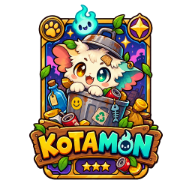
KOTAMON super rare card guide: How to Find, Repair, and Value Foil Cards
Learn how the KOTAMON super rare card hunt works, how foil cards fit into the collection, and how condition affects in-game value.
What the KOTAMON Super Rare Card Is
Finding a KOTAMON super rare card is one of the most valuable moments in KOTAMON: a routine trip through the dump site can lead to a collectible foil card hidden inside an unopened cereal box. If you are searching for a KOTAMON super rare card, this matters because the game connects rarity, card condition, color sets, and rewards instead of treating every discovery as a simple inventory item. The available information does not publish drop rates or a guaranteed spawn route, so the most reliable strategy is to understand the confirmed systems and make each search deliberate.
KOTAMON is a laid-back first-person simulation game developed by KotaMota Games and published by Polnoch. Its central loop combines garbage clearing, hidden-object hunting, progression upgrades, and collecting hand-drawn cards. The game launched for PC on August 20, 2026, and the Steam listing also marks it as Playable on Steam Deck.
The official KOTAMON Steam store page confirms that the collection includes dozens of unique cards. These cards can be organized into sets by color, with completed sets providing rewards. The same listing identifies an unopened cereal box as the source that may contain a super-rare foil card.
| Game detail | Confirmed information |
|---|---|
| Game | KOTAMON |
| Developer | KotaMota Games |
| Publisher | Polnoch |
| Release date | August 20, 2026 |
| Main setting | A dump site where players clear and search garbage |
| Collection | Dozens of unique, hand-drawn cards |
| Special find | An unopened cereal box may contain a super-rare foil card |
| Card progression | Complete color-based sets for rewards |
| Card condition | Cards may be crumpled, damaged, or torn and can be mended or swapped |
| Achievements | 40 Steam Achievements |
Why the foil card matters
The KOTAMON super rare card is not described as a guaranteed reward for completing a particular mission. Instead, it is presented as a lucky discovery connected to an unopened cereal box. That means the hunt is part of the game's broader scavenging loop rather than a conventional checklist quest with a clearly documented objective marker.
The word “foil” is also important. The available information distinguishes this find from the game's ordinary collectible cards, but it does not provide a complete rarity chart, card-name list, or percentage chance. Until those details are documented in-game, be cautious with guides that claim a precise drop rate or promise a guaranteed location.
How to Hunt for the Foil Card
The best way to pursue a KOTAMON super rare card is to treat every cleanup run as both a work assignment and a collection opportunity. The game does not rush the player, so there is room to search carefully rather than sprinting from one objective to the next.
Use this practical sequence during each visit:
- Clear the accessible garbage. The game's primary activity is sifting through trash, and clearing more of the site creates more opportunities to notice interesting objects.
- Inspect unusual containers. Give unopened cereal boxes special attention because the official description specifically connects them with super-rare foil cards.
- Separate cards from ordinary finds. Cards contribute to the collection, while other objects may be hidden treasures that the dump-site owner will pay for.
- Check color-set progress. A card that completes a set may be useful even if it is not the rarest card in your inventory.
- Review condition before making a decision. Crumpled, damaged, and torn cards have different implications for repair, swapping, and price.
- Use earnings on upgrades. Character upgrades improve clearing speed, strength, and efficiency, which can make repeated searches more productive.
This approach does not create better odds that have been verified by the developer. It simply ensures that the player does not overlook the systems that are confirmed: garbage clearing, cereal-box discoveries, color sets, card repair, card swapping, hidden treasures, and character upgrades.
| Find or activity | What it contributes | Recommended response |
|---|---|---|
| Regular garbage | The main search environment | Clear it methodically and watch for collectible items |
| Unopened cereal box | Possible source of a super-rare foil card | Inspect it whenever encountered |
| Standard collectible card | Progress toward the wider collection | Check its color, condition, and set relevance |
| Damaged or torn card | A repair or swap decision | Try the available mending or consider a swap |
| Completed color set | Rewards from collection progress | Track which colors are still missing |
| Hidden treasure | Payment from the dump-site owner | Collect it as part of the run's income |
| Character upgrade | Better clearing performance | Invest in upgrades that improve efficiency |
A realistic search mindset
A KOTAMON super rare card should be treated as a fortunate find, not as something that appears on a fixed schedule. The supplied sources do not confirm whether cereal boxes have a set spawn point, whether the boxes refresh, or whether specific upgrades affect their contents. Avoid wasting time on unsupported reset tricks or route claims unless the game itself or a reliable player record confirms them.
A better goal for early sessions is to improve your overall collection and income at the same time. Even when a search does not produce a foil card, standard cards can advance a color set, damaged cards can become repair projects, and other discarded objects can generate payment. This keeps every run useful.
Repair, Condition, and In-Game Value
The card system in KOTAMON includes more than rarity. The official description says cards may arrive crumpled, damaged, or even torn into pieces. Players can mend them or swap them for better ones, and cards in better condition are more expensive in the game.
That creates an important decision: the rarest card is not automatically the most valuable version of that card. A super-rare foil card in poor condition may require attention before it reaches its best in-game price. Conversely, a less spectacular card in excellent condition may be useful for earnings or collection progress.
The following table turns the confirmed mechanics into a practical decision guide.
| Card state | Confirmed significance | Practical priority |
|---|---|---|
| Best available condition | Better condition corresponds to a higher in-game price | Preserve it and check whether it completes a color set |
| Crumpled | It is a damaged form that can be addressed through the card system | Consider mending before deciding to swap |
| Damaged | The game allows players to mend or exchange cards | Repair it when collection progress makes it worthwhile |
| Torn into pieces | Torn cards are specifically included among the possible damaged finds | Attempt the available mending option before discarding the card |
| Super-rare foil | A special collectible that may come from an unopened cereal box | Treat it as a collection priority and assess its condition |
| Duplicate or unnecessary card | The sources do not explain duplicate handling in detail | Do not assume its value; use the game's available repair or swap choices |
A useful example is a damaged foil card that supplies the final missing color in a set. In that situation, collection progress may be more important than immediately exchanging the card. Another example is a card that does not advance a set but has strong condition-based value. For that item, preserving or improving its condition may be the better decision.
The key distinction is between in-game value and real-world resale value. The supplied material discusses card prices inside KOTAMON, but it does not establish a real-money marketplace, external trading economy, or fixed dollar value for any foil card. Claims that a particular card is worth a specific amount outside the game are not supported by the available sources.
A Repeatable Collection Route
KOTAMON is designed around gradual progress. The game describes a relaxed dump-site experience, but it also includes objectives from the site owner, hidden treasures, card collection rewards, and upgrades that make the player faster and more efficient. A repeatable routine helps balance those goals.
| Stage | Action | Why it helps |
|---|---|---|
| 1. Start the sweep | Clear the immediate area and identify visible objects | Establishes a clean search pattern |
| 2. Prioritize containers | Look carefully at unopened cereal boxes | They are the confirmed source associated with foil cards |
| 3. Sort discoveries | Distinguish cards from other hidden treasures | Cards support collection progress; other finds can provide payment |
| 4. Inspect cards | Note condition and color-set relevance | Prevents valuable repair or set opportunities from being missed |
| 5. Complete objectives | Fulfill orders from the dump-site owner | Keeps the work side of the gameplay loop moving |
| 6. Improve the character | Purchase or apply available upgrades | Makes future garbage-clearing runs more efficient |
| 7. Review progress | Check collection gains and remaining set gaps | Gives the next search a clear purpose |
This route is especially useful when you are not finding the KOTAMON super rare card immediately. Instead of abandoning the search after one unlucky run, you continue building income, improving efficiency, and filling standard card sets. Those gains support future searches without relying on an unverified theory about rarity.
The game also includes 40 Steam Achievements, which provides another long-term progress marker. Achievements should not be assumed to reveal the exact foil-card odds, but they can help structure a broader completion goal alongside the collection itself.
What current sources do not confirm
The available references identify the foil-card concept clearly, but they leave several details unanswered. That is normal for a newly released game, especially on its release date. No supplied player experience or community report establishes a definitive percentage chance, guaranteed cereal-box location, complete card catalog, or confirmed upgrade that increases foil-card odds.
| Unconfirmed detail | Best current conclusion |
|---|---|
| Exact drop rate | No published percentage is available in the supplied material |
| Guaranteed location | No fixed spawn point is documented |
| Full card names | The sources confirm dozens of cards but do not list them all |
| Best repair method | Mending is confirmed, but detailed costs and outcomes are not |
| Real-world card price | Only in-game price effects are supported |
| Rarity boost from upgrades | Upgrades improve performance, but a rarity effect is not confirmed |
Keeping these limits in mind makes the guide more useful. You can follow the documented mechanics confidently while avoiding made-up statistics. As more player experience accumulates, the community may be able to establish reliable routes and probabilities, but those should be treated as community reports until verified.
KOTAMON Super Rare Card FAQ
How do you find a KOTAMON super rare card?
Search through the dump site and inspect unopened cereal boxes. The official game description identifies those boxes as a possible source of a super-rare foil card. It does not confirm a guaranteed location, required quest, or exact drop rate, so the discovery should be treated as luck within the normal scavenging loop.
Does every unopened cereal box contain a foil card?
No. The available description says a foil card may be inside an unopened cereal box if you are lucky. That wording indicates a chance-based discovery rather than a guaranteed reward. Search the boxes you find, but do not assume that every box will produce a KOTAMON super rare card.
Should I repair a damaged card or swap it?
Consider both collection progress and condition. KOTAMON allows players to mend damaged cards or swap them for better ones, and better condition is associated with a higher in-game price. If the card completes a color set, repairing it may support collection rewards. If it does not help your collection, swapping may be worth considering when the game's available options make the exchange favorable.
Is the KOTAMON super rare card worth real money?
The supplied sources only support an in-game value. They explain that card condition affects the price within KOTAMON, but they do not document a real-money marketplace or external resale value. Treat claims about dollar prices, guaranteed profits, or a player-to-player economy as unverified unless official information supports them.
Related Guides
KOTAMON All Cards Guide: Find, Repair, and Complete the Collection
Use this KOTAMON all cards guide to organize your search, repair damaged finds, target foil cards, and complete color-based sets.
KOTAMON card collection guide: Find, Repair, Trade, and Complete Every Set
Build your KOTAMON card collection with practical tips for trash-site searches, set rewards, repairs, swaps, foil finds, and upgrades.
KOTAMON Card Game Guide: How the Trash-Sorting Collection Works
Looking for a kotamon card game guide? Learn KOTAMON's trash-sorting loop, card condition, repairs, swaps, foil finds, and early upgrade priorities.
KOTAMON Card Locations: Where to Find Cards and Foils
Searching for kotamon card locations? Learn where KOTAMON cards and foil cards are found, how to search the dump, and how to complete sets.