KOTAMON Fan Art: A Practical Guide to Finding, Creating, and Sharing Original Work
Learn how to find, create, credit, and share KOTAMON fan art using reliable game references and clear content labels.
Why KOTAMON Fan Art Is Worth Making
Some game communities begin with a single memorable image: a card, a character pose, or a visual detail players want to redraw. That is the opportunity behind kotamon fan art: a focused illustration can turn a personal reaction to KOTAMON into something another player can recognize, discuss, and build on. This guide to kotamon fan art shows how to find reliable references, plan an original piece, and share it with accurate credit and content notes.
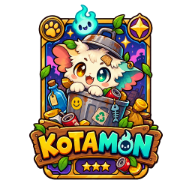
The available references point to trading-card illustrations as one of KOTAMON's clearest visual anchors. That gives artists a useful starting point without requiring them to invent character names, backstories, or visual details that have not been documented in the supplied material.
A strong community artwork workflow should help with three separate goals:
| Goal | Practical starting point | Useful result |
|---|---|---|
| Discover references | Search for the exact game name alongside “fan art,” “illustration,” or “trading card” | A shortlist of possible community posts |
| Develop an idea | Use the card-art context as inspiration while changing the pose, composition, and design details | An original art brief |
| Publish responsibly | Identify the game, mark the work as unofficial, and credit the artist or reference source | A clear, trustworthy post |
The aim is not to treat every image online as official KOTAMON artwork. It is to make the path from a search result to an original, properly labeled illustration easy to follow.
What the Available References Actually Confirm
Source discipline matters when a game has limited indexed community material. The supplied reference set contains three relevant web pages and no YouTube results. It confirms several useful facts about KOTAMON, but it does not provide a verified fan-art directory, a full character roster, an official art guide, or a named community art event.
The canonical KOTAMON Steam listing is the strongest reference for identifying the exact game. Its developer-provided content description explains that some trading-card illustrations show adult characters in revealing clothing, tight clothing, or sexual poses. The same notice states that the game has no sexual scenes or suggestive content, and that players can voluntarily drink beer.
That distinction is important for artists. A content note describing card illustrations is not a complete visual style guide, and it is not permission to copy, repost, or sell those images. Use it to understand the boundaries of the reference material, then create a composition that belongs to you.
| Reference | What it supports | What it does not establish |
|---|---|---|
| Canonical KOTAMON Steam listing | The exact game identity and the presence of trading-card illustrations | A complete list of characters, card designs, or fan-art permissions |
| Steam content description | Some card illustrations include mature visual elements; all game characters are described as adults | That every KOTAMON artwork must use mature themes |
| KotaMota public posts shown in the KotaMota public X profile | A post directs audiences to the KOTAMON Steam page, and another announces an August 20 release date | A catalog of fan artists or a community art directory |
| Steam Community reference | A community-facing page connected with the KOTAMON app and related content information | Proof that a particular image or artist is officially associated with the game |
| Similar-handle social profile | A profile may contain the word “kotamon” without referring to this game | Evidence that the account created KOTAMON fan art |
Community reports: The supplied research does not include a verifiable player experience describing a specific KOTAMON fan-art piece. It includes public social profiles and a Steam Community page, but those sources should not be stretched into evidence of a fan-art trend, artist relationship, or community consensus.
When writing a caption or article, separate confirmed information from creative interpretation. “Inspired by KOTAMON's trading-card illustrations” is appropriately cautious. “This is the official portrait of [invented character name]” is not supported by the supplied references.
How to Find Reliable KOTAMON Fan Art
When searching for KOTAMON fan art, begin with the exact entity name rather than a broad image search. The supplied sources show why this matters: a profile handle or username can resemble the game name without having a confirmed connection to KOTAMON.
Use several search passes, then verify each result before featuring it:
| Search pass | Example query | Keep the result when |
|---|---|---|
| Exact entity | "KOTAMON" "fan art" | The post names KOTAMON as the game being illustrated |
| Visual reference | "KOTAMON" "trading card" | The caption or surrounding context clearly connects the image to the game |
| Medium-specific | "KOTAMON" illustration or "KOTAMON" drawing | The creator identifies the work as an original illustration |
| Platform-specific | "KOTAMON" fan art plus the platform name | The result leads to an accessible original post or portfolio |
| Attribution check | Artist name plus KOTAMON | The artist's own page, rather than an unattributed repost, is available |
A search result is only a lead until it passes three checks:
- The game is spelled exactly as
KOTAMON. - The image, caption, or post context connects the work to the game at the Steam app identified in the reference material.
- The original creator can be identified and credited.
Save a simple record for every artwork you may reference. Include the artist name, original post URL, platform, publication date if available, and the exact wording that connects the work to KOTAMON. Add a note about whether the image is safe for general audiences or requires a content warning.
| Record field | What to capture | Why it helps |
|---|---|---|
| Artist | Display name and account handle | Prevents accidental misattribution |
| Original source | Direct post or portfolio URL | Lets readers find the creator |
| Entity match | Exact mention of KOTAMON or the app | Reduces namesake confusion |
| Artwork status | Original, repost, commission, or unknown | Helps determine whether sharing is appropriate |
| Content note | Clean, mature, or unclear | Sets accurate reader expectations |
| Permission status | Publicly shared, repost permitted, or unconfirmed | Avoids treating visibility as reuse permission |
If the creator is unclear, do not present the image as a confirmed community example. A missing credit is a reason to keep researching, not a reason to fill in the gap with an assumption.
Build an Original KOTAMON Fan Art Brief
Once you have a verified reference, build from a brief instead of copying a screenshot. A brief gives the artwork a clear connection to KOTAMON while leaving enough room for an original style, pose, and composition.
| Brief element | Safe creative choice | Example |
|---|---|---|
| Entity | State the game name and use the canonical listing for identification | “Unofficial KOTAMON fan art” |
| Visual anchor | Borrow the idea of a trading-card presentation, not an existing card layout | Portrait-oriented framing with an original border |
| Subject | Use an unnamed adult character unless an official name is verified | “An adult character in an original pose” |
| Composition | Change the silhouette, camera angle, crop, and visual hierarchy | Three-quarter view with a custom background |
| Medium | Choose an independent treatment | Digital painting, ink drawing, pixel art, or collage |
| Color direction | Select a palette based on your own mood or theme | High-contrast colors with two accent tones |
| Content note | Label revealing, tight, or sexualized imagery accurately | “Content note: revealing clothing and suggestive pose” |
| Attribution | Credit the game as inspiration without implying endorsement | “Fan-made and unofficial; inspired by KOTAMON” |
A practical first pass can take 30 minutes. Spend five minutes confirming the reference, five minutes writing the brief, ten minutes making three small thumbnails, and ten minutes developing the strongest composition. Three thumbnails are enough to compare different poses or crops without turning planning into a second project.
For example, an original prompt could read:
Create unofficial KOTAMON fan art inspired by the idea of a trading-card portrait. Show an adult character in a new pose, with original clothing details, a fresh silhouette, and a background designed from scratch. Do not copy an existing card, logo, character name, or composition. Add a clear fan-art label and a content note if the final pose or clothing is revealing.
This approach preserves the recognizable connection while avoiding unsupported canon. Do not add invented factions, statistics, character histories, or official-sounding terminology to the caption unless a reliable KOTAMON source confirms them.
The same principle applies to character studies. You can explore gesture, facial expression, lighting, costume shape, or card-like framing without claiming that your interpretation is the definitive design. The result should read as an artist's response to the game, not as an unverified piece of official production art.
Share KOTAMON Fan Art Responsibly
Good KOTAMON fan art benefits from a caption that answers basic questions before a viewer has to ask. Identify the game, state that the work is unofficial, name the artist, and link to a reliable game reference. If the illustration includes mature visual elements, add a plain-language content note before the image or in the first line of the caption.
Nothing in the supplied references grants permission to reuse Steam screenshots or trading-card images as publishing assets. Treat those materials as identification and inspiration. Do not trace an existing card, remove a creator's watermark, or repost an image without permission simply because it is publicly visible.
A concise caption template is:
Unofficial KOTAMON fan art by [artist name]. Inspired by the game's trading-card illustrations. Original composition and design. Reference: [canonical KOTAMON Steam listing]. Content note: [accurate description, if needed].
Use descriptive alt text as well. Instead of writing “KOTAMON art,” describe the visible subject, pose, medium, and any relevant content note. This helps readers who use screen readers and makes the post more useful when the image fails to load.
| Publishing check | Recommended wording or action | Benefit |
|---|---|---|
| Game identity | Use “KOTAMON” exactly and link the game page | Helps readers distinguish the intended entity |
| Fan status | Say “unofficial fan art” or “fan-made illustration” | Prevents confusion with official assets |
| Artist credit | Include the creator's display name and original account | Directs attention to the artist |
| Reference credit | Link the KOTAMON Steam listing | Gives readers a dependable starting point |
| Mature content | Describe revealing clothing, tight clothing, or sexualized poses when present | Sets accurate expectations |
| Permission | Ask before reposting, editing, translating, or using the work commercially | Respects creator control |
| Accessibility | Add specific alt text and avoid hiding essential context in an image | Makes the post easier to understand |
If a post comes from a community report or player experience, label it that way and preserve the original attribution. A community report can show that a player shared an interpretation; it should not be rewritten as a developer statement. Similarly, a public profile can help locate a source without proving that the account is officially connected to the game.
KOTAMON Fan Art FAQ
What counts as KOTAMON fan art?
KOTAMON fan art is an unofficial original drawing, painting, model, collage, or other creative work inspired by KOTAMON. The supplied references specifically support using the game's trading-card illustrations as a visual starting point, but they do not identify a required style or official fan-art format.
Where can I find KOTAMON fan art?
Search the exact phrase "KOTAMON" "fan art" and add terms such as “illustration” or “trading card.” Check the creator's original post, confirm that it refers to this KOTAMON, and record the attribution before sharing it. The supplied sources do not document a dedicated fan-art hub, so avoid presenting any single account as the official community archive.
Can I use KOTAMON trading-card images in my own artwork?
You can use the card-art concept as inspiration, but the supplied references do not grant permission to repost, trace, or commercially reuse existing images. Create a new composition, credit the game as inspiration, and obtain permission before using another artist's work or making a derivative edit.
How should mature KOTAMON fan art be labeled?
Use a specific content note if your work includes revealing clothing, tight clothing, or a sexualized pose. The KOTAMON content description identifies those elements in some trading-card illustrations while also stating that the game has no sexual scenes or suggestive content. Your label should describe your own image accurately and follow the rules of the platform where you publish it.
Related Guides
KOTAMON Community Guide: Card Finds, Repair Tips, and Ways to Join the Conversation
A practical KOTAMON community guide to card finds, repairs, upgrades, player reports, and verified places to follow the game.
KOTAMON Discord: How to Find the Community, Updates, and Player Help
Find the KOTAMON Discord community, verify invite links, follow game updates, and ask players for useful KOTAMON help without relying on rumor.
KOTAMON Mods: What Players Can Use Now and How to Track Safe Community Add-Ons
Looking for KOTAMON mods? Learn what is confirmed, how to verify community add-ons, protect saves, and improve your card-collecting run safely.
KOTAMON Reddit Guide: Find Verified Community Reports and Game Discussions
Looking for kotamon reddit discussions? See what is confirmed about KOTAMON, where early players are talking, and how to separate reports from rumors.