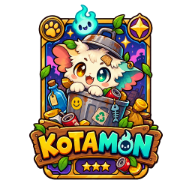
KOTAMON Creatures Guide: What We Know About the Collectible Card Characters
A practical guide to KOTAMON creatures: identify collectible card characters, find rare foils, repair damaged cards, and track your collection.
If you are searching for kotamon creatures, the important detail is that KOTAMON presents them primarily as collectible trading-card characters rather than a documented roster of roaming monsters. That distinction matters because finding, repairing, and organizing cards is central to progression, so this kotamon creatures guide separates confirmed mechanics from assumptions. KOTAMON turns work at a garbage dump into a relaxed hunt for rare cards, valuable finds, and complete color-based sets.
What Are KOTAMON Creatures?
The phrase KOTAMON creatures is useful when searching for the game's collectible characters, but the available game descriptions usually refer to them as Kotámons or trading cards. The official store listing describes dozens of unique cards with hand-drawn illustrations. Players can discover cards while sorting through garbage, then repair or exchange damaged examples as they build a larger collection.
The card system appears to be driven by discovery, condition, rarity, and collection value. It is not presented in the available material as a traditional creature-battling database. A gameplay preview does show a rare MerkotA card with HP and ATK values, but that image alone does not confirm a full combat system or prove that every card has battle abilities.
The official KOTAMON Steam page confirms that the game includes single-player simulation gameplay, collectible card sets, hidden treasures, card repair, card swapping, and character upgrades.
| Collection feature | What the available sources confirm | Why it matters |
|---|---|---|
| Card roster | KOTAMON includes dozens of unique cards | The collection is broad, but no complete public list is provided |
| Artwork | Cards use hand-drawn character illustrations | Visual details may help identify duplicates and card variations |
| Set structure | Players can collect sets organized by different colors | A card may be useful for completion even when it is not the most valuable |
| Rare discoveries | Unopened cereal boxes can contain super-rare foil cards | Packaging and rarity are important details to record |
| Card condition | Cards may be crumpled, damaged, or torn into pieces | Repairing a card can improve its value |
| Card information | A preview shows a rare MerkotA card with HP and ATK values | Some cards display additional statistics, although their full purpose is not confirmed |
The supplied material does not establish the names, species, elements, evolutions, or abilities of the entire roster. It also does not confirm that players tame, breed, or fight these characters. Treat those topics as unanswered rather than filling the gaps with details from another game.
The KOTAMON Creatures We Can Confirm
Only a small number of individual card examples are identified by name in the supplied sources. That does not mean the game contains only two named characters. It means these are the examples that can be discussed accurately without inventing a roster.
For readers comparing KOTAMON creatures, the safest approach is to separate what is visible from what is inferred. A card's appearance, condition, packaging, and displayed information are useful evidence. A presumed element, battle role, or evolution path is not confirmed by the available material.
| Card or character example | Confirmed evidence | Safe conclusion |
|---|---|---|
| MerkotA | A gameplay image description identifies a rare MerkotA trading card with HP and ATK values | MerkotA is a named collectible card example with visible statistics |
| Angel | A gameplay image description shows a shiny Angel card on a workbench while the player holds a toothbrush-like tool | Angel is another named card example shown in an inspection or repair context |
| Foil card | The official description mentions an unopened cereal box containing a super-rare foil card | Some discoveries can be distinguished by packaging and foil rarity |
| Other Kotámons | The official page refers to dozens of unique cards but does not publish a complete roster in the supplied text | The collection is much larger than the named examples |
The card illustrations may also be relevant for players who want to know the game's content boundaries. Steam's mature-content description says some trading-card illustrations depict adult characters in revealing or tight clothing or sexual poses. It also states that the game contains no sexual scenes or suggestive content, that all characters are adults, and that drinking beer is optional.
What the available evidence does not show
The current reference material does not provide:
- A full KOTAMON card checklist
- A confirmed creature-type or elemental system
- An evolution tree
- A complete rarity ranking
- A battle guide for HP and ATK
- Exact spawn locations for individual cards
- A confirmed value chart for every card
This limitation is important for searchers looking for a definitive character wiki. A responsible guide can explain the collection loop and the known examples, but it should not present guesses as official lore.
How to Find More KOTAMON Creatures
The most reliable way to expand your collection is to treat every dump-site visit as both a cleanup job and a card-hunting run. KOTAMON's first-person gameplay places the player in a garbage site where they can rummage through piles, pick up objects, fulfill requests from the site owner, and look for items that were discarded accidentally.
The recommended process below combines the mechanics confirmed by the official description with practical organization habits. The exact locations of individual cards are not documented in the supplied sources, so these are repeatable principles rather than a fixed route.
| Step | Recommended action | Confirmed reason |
|---|---|---|
| 1. Search thoroughly | Rummage through garbage piles and investigate available pickup prompts | Cards and hidden objects are found while clearing the dump |
| 2. Keep an eye on unusual finds | Check items that look different from ordinary trash | The game includes hidden treasures and rare discoveries |
| 3. Inspect each card | Note its name, appearance, condition, and any displayed statistics | Cards can be damaged and some show information such as HP and ATK |
| 4. Sort by set | Group cards by their visible color or collection category | Completing color sets provides rewards |
| 5. Repair or exchange | Mend damaged cards or swap them when a better version is available | Card condition affects how expensive a card is |
| 6. Search for packaging | Pay special attention to unopened cereal boxes | A box may contain a super-rare foil card |
| 7. Improve your worker | Use available upgrades for carrying capacity, energy, buzz, and speed | The preview shows these upgrade categories, which support longer searches |
Do not automatically discard a damaged card. The game's card system specifically allows damaged and torn cards to be repaired or swapped. A card that looks poor at first may become more useful after maintenance, particularly if it completes a color set or represents a rare character.
Condition should be tracked separately from identity. For example, two copies of the same character may not have the same value if one is intact and the other is crumpled. The official description states that better condition makes a card more expensive, so a collection tracker should record both the character and the card's current state.
There are several practical priorities worth following:
- Search the entire area before returning to an upgrade or delivery point.
- Treat owner requests as a second objective during a collection run.
- Record foil packaging before repairing or exchanging anything.
- Keep one copy of an unfamiliar card until you know whether it completes a set.
- Compare damaged and repaired versions instead of judging value by artwork alone.
- Improve movement and carrying-related upgrades when a search repeatedly ends because of limited efficiency.
- Track achievement progress separately from the card checklist. Steam lists 40 achievements for the game, but the supplied material does not connect every achievement to a specific card.
The key is to avoid confusing rarity with usefulness. A super-rare foil is an obvious priority, but an ordinary-looking card may be the final piece of a color set. In a collection game, completion value and resale value do not always point to the same decision.
Build a Reliable KOTAMON Creatures Tracker
A simple tracker can prevent duplicate trades and make the card economy easier to understand. Since the available sources do not provide a complete official checklist, create one gradually as cards appear during play. Use a separate entry for each physical copy when condition or packaging differs.
| Tracker field | What to record | Example |
|---|---|---|
| Name or visual label | The printed name or a temporary description | MerkotA, Angel, or “blue-winged card” until identified |
| Set color | The card's visible color category | Record the color shown in the collection interface |
| Condition | Intact, crumpled, damaged, torn, or repaired | “Torn, repaired” is more useful than simply “owned” |
| Packaging | Whether it came from ordinary trash or an unopened box | “Unopened cereal box, foil card” |
| Displayed statistics | HP, ATK, or other values visible on the card | Record the numbers exactly as shown |
| Current action | Keep, repair, compare, or swap | Prevents accidental exchanges |
| Collection status | New, duplicate, set complete, or set missing | Shows which cards are worth pursuing next |
The supplied gameplay preview identifies MerkotA and Angel, but it does not provide their full stats, colors, prices, or collection requirements. Leave unknown fields blank instead of estimating them. That keeps your notes useful if later discoveries reveal additional card categories.
A two-pass method works well. During the first pass, collect and identify everything that may be a card or hidden treasure. During the second pass, inspect condition and decide whether to repair, keep, or swap. This reduces the chance of exchanging a valuable damaged card before checking whether it is rare or needed for a set.
Use a separate page for confirmed facts and player observations. Confirmed facts include the existence of color sets, foil cards, repair, swapping, and condition-based value. Player observations can include where a card was found, how often a specific pile produced a card, or whether a particular upgrade seemed helpful. Label those notes as player experience rather than official mechanics.
How to read card value
The available information supports three clear value signals:
- Rarity: A super-rare foil card is more desirable than an ordinary find.
- Condition: A better-preserved card is more expensive than a damaged one.
- Collection role: A card that completes a color set may be valuable for rewards even if it is not the rarest item.
There is no supported complete ranking of the KOTAMON creatures or their cards. Avoid guides that assign exact tiers, prices, or drop rates unless they provide evidence from the game itself. At launch, the reliable strategy is to preserve information, improve condition, and finish sets while you learn the collection.
FAQ
What are KOTAMON creatures in the game?
KOTAMON creatures are best understood as the characters depicted on the game's collectible trading cards. The available descriptions focus on finding, repairing, swapping, and collecting those cards rather than presenting a confirmed roster of enemies or battle-ready monsters.
How many creatures or cards does KOTAMON have?
The official game description says KOTAMON contains dozens of unique cards. It does not provide an exact total or a complete checklist in the supplied material, so any precise roster count should be treated cautiously.
Can damaged KOTAMON cards be repaired?
Yes. Cards can be crumpled, damaged, or torn into pieces, and the game allows players to mend or swap them. Since better condition increases a card's price, repair is an important part of managing the collection.
What is the best way to find rare cards?
Search garbage piles carefully, investigate unusual pickup opportunities, and look for unopened cereal boxes. The official description specifically identifies those boxes as a possible source of super-rare foil cards. Also track color sets, because an ordinary card may be the one needed to complete a rewarding collection.
Related Guides
KOTAMON character list: Confirmed Cards, Collection Details, and Finding Tips
Explore the KOTAMON character list, confirmed card examples, rarity clues, repair mechanics, and practical tips for completing the collection.
KOTAMON character names: What We Know About the Card Roster
Looking for kotamon character names? Here is what KOTAMON's sources confirm, what remains unnamed, and how to track collectible card characters.
KOTAMON Characters Guide: Cards, Rarity, Repairs, and What Collectors Should Know
Explore KOTAMON characters, collectible card examples, color sets, rare foils, condition, repairs, swaps, and efficient collection tips.
KOTAMON Mascot Explained: Characters, Cards, and What Players Know
Looking for the KOTAMON mascot? Learn what the sources confirm about its collectible characters, cards, demo, and community theories.