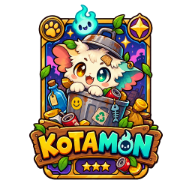
KOTAMON Monsters Guide: How Character Cards, Conditions, and Finds Work
Learn how KOTAMON monsters fit into the card-collecting loop, from trash-pile finds and repairs to swaps, set rewards, and upgrades.
What “KOTAMON Monsters” Refers To
Searching for KOTAMON monsters? The available game material points to a collectible-card hunt rather than a traditional monster-battling roster. Understanding what KOTAMON monsters means matters because your progress comes from finding, preserving, repairing, and organizing character cards, not from following an official bestiary.
In KOTAMON, the characters are presented through collectible trading cards discovered while working through a dump site. The official KOTAMON Steam page describes dozens of unique cards, color-based collections, rare finds, and cards that can be damaged or restored.
That makes “KOTAMON monsters” a useful search phrase, but not a confirmed in-game classification. The supplied sources use terms such as KOTAMON characters, cards, and Kotámons. They do not provide a complete monster list, elemental chart, battle guide, or official rarity database.
| Topic | What the sources confirm | What remains unknown |
|---|---|---|
| KOTAMON monsters | Collectible KOTAMON characters appear on trading cards | Whether “monsters” is an official category |
| Collection size | The game contains dozens of unique cards | The exact number of cards |
| Card art | Cards use hand-drawn illustrations | A complete gallery of every character |
| Card groups | Sets can be organized by different colors and provide rewards | The names or requirements of every set |
| Card value | Better condition makes a card more expensive | Exact prices, formulas, or market rules |
| Card statistics | A preview image shows HP and ATK fields on one rare card | Whether cards are used in combat or how stats work |
The most reliable way to think about the characters is simple: they are the collectibles that give the garbage-sorting loop its long-term purpose. You are not just clearing piles. You are searching for cards, improving their condition, completing color sets, and deciding which discoveries are worth keeping or swapping.
How the KOTAMON Card Hunt Works
KOTAMON combines first-person simulation gameplay with hidden-object searching and card collecting. The main loop begins at the dump site, where you sift through garbage and inspect objects for useful discoveries. The official description also mentions orders from the dump site owner and valuable objects that were discarded by mistake.
A preview on the KOTAMON Playtester page shows first-person trash searching, TAKE prompts, a card interface, a vending-machine area, and an upgrade shop. These visuals help explain the rhythm of play, although they do not establish every mechanic or drop rate.
| Stage | Confirmed activity | Practical objective |
|---|---|---|
| Search | Rummage through trash and large garbage piles | Inspect each area instead of moving on immediately |
| Interact | Preview footage shows TAKE prompts for objects | Watch for interactable items in cluttered spaces |
| Collect | Find trading cards, hidden treasures, and other discarded objects | Separate collectible cards from ordinary cleanup items |
| Sort | Build sets using cards of different colors | Track which color groups are closest to completion |
| Restore | Mend cards that are crumpled, damaged, or torn | Improve condition before deciding what to do with a card |
| Swap | Exchange cards for potentially better ones | Use duplicates or weaker-condition cards strategically |
| Upgrade | Improve the player’s efficiency at clearing garbage | Reduce the time and effort required for future searches |
The game’s relaxed structure is important. The official listing says there is no pressure to rush through the work, so a careful search can be more useful than sprinting from pile to pile. When looking for KOTAMON monsters, treat each garbage heap as an examination area rather than background scenery.
A practical search route looks like this:
- Start with one manageable section of the dump.
- Search the visible pile from one side to the other.
- Investigate every item that produces an interaction prompt.
- Check the condition of each card as soon as you collect it.
- Note its color and whether it helps complete an existing set.
- Move on only after the area has been thoroughly checked.
This approach creates a repeatable routine without relying on unverified claims about spawn locations. The available sources do not identify fixed card spawns, secret coordinates, or percentage-based drop rates, so any guide presenting exact numbers should be treated as a community report unless the developer confirms it.
Card Conditions, Color Sets, and Value
Card condition is one of the most useful systems described in the available material. Cards may be found crumpled, damaged, or even separated into pieces. KOTAMON allows players to mend or swap cards, and the listing specifically states that cards in better condition are more valuable.
The condition system gives ordinary discoveries a second layer of decision-making. A card is not automatically worthless because it arrives damaged. It may be worth restoring, especially if it belongs to a color set or represents a character you have not collected before.
| Card situation | What is supported by the sources | Recommended response |
|---|---|---|
| Better condition | Cards in better condition have a higher price | Preserve them and compare their collection value |
| Crumpled card | Crumpled cards can appear in the dump | Consider mending before swapping |
| Damaged card | Damaged cards can be restored or exchanged | Check whether it completes a set before discarding it |
| Torn card | Some cards may be found in pieces | Look for the repair option rather than assuming the card is lost |
| Duplicate card | The game supports swapping cards | Use duplicates to improve collection coverage |
| Super-rare foil card | An unopened cereal box may contain one | Give cereal boxes extra attention during searches |
Color sets are another major reason to avoid judging a card only by its apparent price. The Steam listing explains that collecting sets of different colors provides rewards. That means a lower-value card may still be strategically important if it fills the final gap in a set.
A useful inventory system is to record four details for every notable card:
- Character or card name
- Color group
- Current condition
- Whether it is new, duplicated, or needed for a set
The supplied sources do not define formal rarity tiers in detail. They refer to extra-rare cards and a super-rare foil card, but they do not publish a complete hierarchy or explain whether rarity, condition, or set membership has the greatest effect on value. Keep those concepts separate until the game provides clearer information.
The preview material identifies at least two visual card examples. One is a rare MerkotA card displayed with HP and ATK fields. Another is an Angel card shown as a shiny card being inspected at a workbench. These examples confirm named cards and card presentation, but they do not prove that KOTAMON includes a conventional combat system.
Tips for Finding More KOTAMON Monsters
For players using KOTAMON monsters as a roster-search query, the best strategy is to optimize the collection process rather than chase unsupported statistics. The game rewards observation, organization, and repeated improvement.
| Priority | What to do | Why it helps |
|---|---|---|
| 1. Search coverage | Work across each pile in a consistent pattern | Reduces the chance of overlooking a card or treasure |
| 2. Interactables | Respond to visible TAKE prompts and inspect unusual objects | Preview footage shows cards and useful items mixed into the trash |
| 3. Cereal boxes | Pay attention to unopened boxes | The official listing identifies them as a possible source of super-rare foil cards |
| 4. Card condition | Check damaged cards before swapping them | Mending may improve their value |
| 5. Color completion | Track incomplete color sets | Completing sets provides rewards |
| 6. Owner requests | Fulfill orders from the dump site owner | Orders are part of the stated gameplay loop |
| 7. Hidden finds | Search for objects discarded by mistake | The owner pays for valuable hidden treasures |
| 8. Upgrades | Use the upgrade shop as your efficiency needs grow | The game emphasizes becoming faster and more effective at clearing garbage |
Start by establishing a baseline. Count the cards you already have, list your missing colors, and mark which cards are damaged. This prevents a common collection mistake: swapping away an apparently ordinary card that is actually the last requirement for a reward set.
Condition should also guide your decisions. If a card is torn but unique, repairing it may be more valuable than exchanging it immediately. If you already own a stronger-condition duplicate, a swap may make more sense. The exact costs and exchange rules are not included in the supplied sources, so treat this as a decision framework rather than a guaranteed profit formula.
Upgrades deserve attention because they directly affect how much ground you can cover. The official description says upgrades make the player better, faster, stronger, and more efficient. A Playtester screenshot shows an upgrade menu with categories labeled bag, energy, buzz, and speed. The sources do not explain the exact effect of each category, so test upgrades against your current bottleneck instead of assuming one stat is always best.
For example, a player struggling to search for long periods may benefit from an upgrade related to energy, while a player spending too much time moving trash may prefer a speed-focused improvement. This is a practical interpretation of the visible systems, not a developer-published ranking.
Known KOTAMON Monsters and Unconfirmed Details
A complete KOTAMON monsters roster cannot be responsibly written from the available evidence because the relevant sources identify only a small number of card examples. The official game page says there are dozens of unique cards, but it does not list every name.
| Character or label | Evidence available | Safe conclusion |
|---|---|---|
| MerkotA | A Playtester preview shows a rare card popup with HP and ATK fields | MerkotA is a named card example; its full mechanics are not documented |
| Angel | Preview imagery shows a shiny Angel card on a workbench | Angel is a displayed card example, not a confirmed class or role |
| Unnamed KOTAMON characters | Steam and creator material describe collectible cards featuring different characters | The roster is larger than the named examples |
| Super-rare foil card | The Steam listing describes a possible foil card inside an unopened cereal box | This is a rare card presentation, not a confirmed character name |
| Color-set cards | The official description connects different card colors with collection rewards | Color appears to matter for collection progress |
The Steam page also lists 40 achievements. That is useful for completion-focused players, but it should not be mistaken for a 40-character roster. Achievements can cover many parts of the simulation, including cleanup, upgrades, exploration, or collection milestones.
Likewise, the presence of HP and ATK labels on the MerkotA preview does not establish battles, attacks, weaknesses, evolution, or team building. No relevant source explains those systems. A reliable guide should distinguish what is visible from what is confirmed, especially when discussing KOTAMON monsters.
The safest collection goal at launch is therefore broader than memorizing names: find as many unique cards as possible, complete color groups, improve poor-condition discoveries, and use the dump’s hidden-object loop to finance continued progress. As the developer releases more information, a full character directory could add names, card images, rarity details, and confirmed mechanics.
FAQ: KOTAMON Monsters
Are KOTAMON monsters enemies that you fight?
The available sources do not establish that KOTAMON monsters are enemies or that the game includes card battles. They describe KOTAMON characters as illustrations on collectible trading cards. A preview card displays HP and ATK fields, but those labels alone do not confirm how the values are used.
How many KOTAMON monsters are in the game?
The official description says KOTAMON includes dozens of unique cards. It does not provide an exact total, and the 40 Steam achievements should not be interpreted as a character count. The complete roster may require in-game discovery or future information from KotaMota Games.
Where can I find KOTAMON monsters?
You find the cards by searching through garbage at the dump site. The game also highlights hidden treasures, owner orders, and unopened cereal boxes, with the latter offering a chance at a super-rare foil card. The supplied sources do not provide fixed spawn points or drop-rate statistics.
Can KOTAMON cards be repaired or traded?
Yes. The official game description says cards may be crumpled, damaged, or torn, and that players can mend or swap them. Better condition increases a card’s value. The precise repair costs, exchange rules, and limits are not documented in the available material.
Related Guides
KOTAMON character list: Confirmed Cards, Collection Details, and Finding Tips
Explore the KOTAMON character list, confirmed card examples, rarity clues, repair mechanics, and practical tips for completing the collection.
KOTAMON character names: What We Know About the Card Roster
Looking for kotamon character names? Here is what KOTAMON's sources confirm, what remains unnamed, and how to track collectible card characters.
KOTAMON Characters Guide: Cards, Rarity, Repairs, and What Collectors Should Know
Explore KOTAMON characters, collectible card examples, color sets, rare foils, condition, repairs, swaps, and efficient collection tips.
KOTAMON Creatures Guide: What We Know About the Collectible Card Characters
A practical guide to KOTAMON creatures: identify collectible card characters, find rare foils, repair damaged cards, and track your collection.