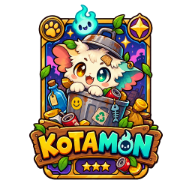
KOTAMON Story Explained: The Rare Card, Garbage Job, and Collection Goal
Explore the KOTAMON story, its rare-card premise, garbage-dump gameplay loop, card repairs, upgrades, and what the sources confirm.
KOTAMON Story: The Premise in Plain English
A super-rare card found in a cereal box turns an ordinary family discovery into a very unusual career change. That is the hook of the KOTAMON story, and it matters because the game's central search is also its narrative engine: the protagonist sorts through a dump to chase collectible value. For anyone searching for the KOTAMON story before playing, the reliable answer is a comic collection premise built around a relaxed simulation, not a chapter-by-chapter plot synopsis.
The official KOTAMON Steam page establishes the central setup. The protagonist's sister finds a super-rare card in a cereal box, prompting the protagonist to become a garbage worker in the hope of finding the entire collection and earning $1,000,000. The game turns that exaggerated goal into a search through trash, collectible-card management, owner requests, and character upgrades.
KotaMota Games also described the concept in a developer announcement about KOTAMON. The post explains that an earlier comic joke developed into a game over several months. That origin helps explain the title's deliberately absurd tone and the contrast between a mundane job and an over-the-top collectible hunt.
| Story element | What the available sources confirm | Why it matters |
|---|---|---|
| Inciting event | The protagonist's sister discovers a super-rare cereal-box card. | The card creates the reason for the entire search. |
| Protagonist's decision | The protagonist becomes a garbage worker. | Trash collection is directly connected to the story premise. |
| Main objective | Find the complete KOTAMON collection and pursue a $1,000,000 goal. | Collection progress and money provide two connected motivations. |
| Setting | A dump site is the primary search environment. | Everyday waste becomes the game's treasure-hunting space. |
| Tone | Steam tags include Comedy and Story Rich, alongside Simulation and Relaxing. | The game presents its narrative through humor and a low-pressure routine. |
| Collection design | The game includes dozens of unique cards, color sets, and possible foil cards. | Finding individual items contributes to a larger completion goal. |
The short version is that KOTAMON does have a story, but its published premise is intentionally compact. The narrative gives meaning to the work loop instead of presenting a detailed cast list or a traditional linear campaign in the available materials.
From a Rare Card to a Collection Goal
The KOTAMON story can be understood as a chain of motivations rather than a conventional plot summary. A rare discovery creates curiosity, curiosity leads to a new job, the job opens access to more cards, and the collection creates a reason to keep improving.
The first step is the cereal-box discovery. A card that appears in an everyday product suddenly has unusual value, which establishes one of the game's recurring ideas: something overlooked can be worth searching for. The dump is therefore more than a backdrop. It is the logical extension of the original discovery.
The second step is the career change. Becoming a garbage worker is funny because it is such an extreme response to a single card. At the same time, it gives the player a clear activity from the beginning. Sorting through discarded objects is not an unrelated minigame; it is the protagonist's chosen method for reaching the collection goal.
The third step is collection management. Steam describes dozens of hand-drawn cards, color-based sets, and unopened cereal boxes that may contain super-rare foil cards. That structure turns the search into more than a simple hunt for one valuable object. Players are encouraged to think about completion, rarity, condition, and rewards.
| Narrative stage | Gameplay connection | Practical question for the player |
|---|---|---|
| The rare discovery | Search through waste and inspect collectible finds. | Could this ordinary-looking item lead to a valuable card? |
| The new job | Clear trash and move through the dump site with a trash bag. | Which search habits make repeated runs more efficient? |
| The collection hunt | Gather cards, complete color sets, and look for foil variants. | Does a find complete a set or improve overall collection progress? |
| The condition problem | Mend crumpled, damaged, or torn cards, or exchange them for better ones. | Is repairing this card more useful than swapping it? |
| The financial objective | Use valuable discoveries and paid hidden finds to support progression. | Should the current priority be collection completion or immediate value? |
| The improvement arc | Purchase upgrades that make the character faster, stronger, or more efficient. | Which upgrade addresses the biggest obstacle in the current routine? |
This framework should not be mistaken for a confirmed list of chapters. The sources do not name specific story missions or provide an ending. Instead, these stages describe how the premise connects to the systems that Steam highlights.
That connection is important for understanding the game's appeal. The protagonist does not need a complicated backstory for the search to feel purposeful. The unusual family incident supplies the motivation, while the collectible-card system supplies the long-term structure.
How the Dump Site Carries the Narrative
The official description presents KOTAMON as a laid-back game. There is no stated pressure to hurry, and the player can methodically sift through garbage or simply run around with a trash bag. That relaxed design changes how the story is delivered. The game appears to rely on repeated discoveries and gradual improvement rather than constant dramatic interruptions.
Orders from the dump-site owner add another layer of direction. The player is not only searching for cards but also completing requests connected to the work environment. Hidden treasures provide a second type of discovery: objects discarded by mistake or accident can be valuable when found and returned through the game's economy.
Cards also carry their own miniature progression system. A card may be crumpled, damaged, or torn into pieces. Repairing or swapping it creates a decision about quality, while the listing states that cards in better condition are more expensive. This gives the collection hunt a useful tension: the most interesting find may not be the cleanest one.
| Search activity | What the source material supports | Best practical approach |
|---|---|---|
| Clearing ordinary trash | Trash removal is the central work activity. | Use early runs to learn the rhythm of searching and collecting. |
| Looking for cards | Cards can appear among discarded objects. | Check unusual finds rather than focusing only on the first visible item. |
| Completing color sets | Sets of different colors provide rewards. | Favor a find that completes a set when its value is comparable to other options. |
| Inspecting card condition | Cards can be crumpled, damaged, or torn. | Do not dismiss a damaged card before considering repair or exchange. |
| Searching cereal boxes | An unopened box may contain a super-rare foil card. | Treat unopened boxes as high-interest discoveries. |
| Finding hidden treasures | Other mistakenly discarded objects can earn payment from the owner. | Investigate non-card items instead of treating them as worthless clutter. |
| Upgrading the character | Upgrades improve speed, strength, and efficiency. | Match upgrades to the part of the search that feels most limiting. |
A useful first-session plan
Start by learning the basic search loop instead of chasing the most valuable possible item immediately. The game is designed around repeated exploration, so understanding how to move, clear waste, and inspect discoveries will make later collection decisions easier.
Next, watch for set progress. A card that completes a color group may contribute more to your overall goals than an isolated card that merely looks rare. The available information does not provide exact reward values, so compare completion value and condition rather than relying on an unverified tier list.
Pay attention to damaged cards. The ability to mend or swap cards means poor condition is not automatically the end of a find's usefulness. A torn card may still matter if it fills a gap in the collection or can be improved.
Finally, use upgrades in response to your current routine. If clearing large quantities of trash is slowing progress, efficiency may be more useful than another general improvement. If movement is the main frustration, speed becomes the logical priority. The official description confirms the upgrade categories, but it does not publish a definitive upgrade order.
What Is Confirmed and What Remains Open
A helpful KOTAMON story guide should separate source-backed information from speculation. The available material explains the premise and the main mechanics clearly, but it does not reveal every plot detail. That distinction matters for readers who want to avoid spoilers or who are comparing the game with a more traditional story-driven release.
The Steam page includes the user-defined Story Rich tag, but the supplied source material does not provide named chapters, a complete character roster, a runtime, or an ending. Those details should not be invented from the title alone.
| Claim or question | Status in the supplied sources | Editorial takeaway |
|---|---|---|
| Does the story begin with a rare cereal-box card? | Confirmed by the Steam title and description. | This is the central inciting event. |
| Does the protagonist search a dump for the collection? | Confirmed. | The work environment is directly tied to the narrative goal. |
| Are there many unique cards? | Confirmed as dozens of hand-drawn cards. | The game supports a broad collection hunt. |
| Do color sets provide rewards? | Confirmed. | Set completion is a meaningful objective. |
| Can damaged cards be repaired or swapped? | Confirmed. | Card condition creates decisions beyond simple pickup. |
| Are hidden treasures part of the search? | Confirmed. | Non-card discoveries also support progression. |
| Is there a confirmed chapter list or ending? | Not provided in the collected material. | Avoid treating fan theories or assumptions as canon. |
| Are exact player plot experiences available here? | No detailed player experience or community report is supplied. | Community reports should not be used to establish story events. |
Practical release and content facts
KOTAMON launched on Steam on August 20, 2026. It is listed as a single-player indie simulation developed by KotaMota Games and published by Polnoch. The page also lists 40 Steam achievements and marks Steam Deck compatibility as Playable.
| Detail | Confirmed information |
|---|---|
| Release date | August 20, 2026 |
| Mode | Single-player |
| Developer | KotaMota Games |
| Publisher | Polnoch |
| Achievements | 40 Steam achievements |
| Steam Deck | Listed as Playable |
| Minimum PC memory and storage | 4 GB RAM and 3 GB available space |
| Recommended memory and storage | 8 GB RAM and 5 GB available space |
| Content note | Steam describes adult card illustrations with revealing or tight clothing and sexual poses, while stating there are no sexual scenes; optional beer is also mentioned. |
For story-focused players, the most important expectation is tone. KOTAMON combines an absurd financial objective with relaxing cleanup, collectible-card restoration, and incremental upgrades. The humor comes from the situation, while the story advances through what the player finds and chooses to improve.
KOTAMON Story FAQ
What is the KOTAMON story about?
The KOTAMON story follows a protagonist whose sister finds a super-rare card in a cereal box. The protagonist then becomes a garbage worker to search for the complete KOTAMON card collection and pursue a $1,000,000 goal. The story premise is closely tied to rummaging through trash, finding hidden objects, repairing cards, and completing collection sets.
Is KOTAMON a story-driven game or a simulation?
It is presented primarily as a relaxed simulation with a story-rich premise. Steam lists Simulation and Story Rich among its user-defined tags, while the game description emphasizes garbage clearing, card collecting, owner orders, hidden treasures, and upgrades. The available sources do not describe a heavily scripted, chapter-based campaign, so players should expect the narrative motivation to work alongside the simulation loop.
How do collectible cards connect to the story?
Cards are the reason the protagonist takes the job and searches the dump. The game includes dozens of unique illustrations, color-based sets, possible foil cards from unopened cereal boxes, and cards that can be repaired or swapped. Their condition affects value, so collecting is connected to both the story objective and the game's progression decisions.
Does KOTAMON contain mature story content?
The Steam content description says some trading-card illustrations depict adult characters in revealing or tight clothing and sexual poses, without full nudity, nipples, or genitals. It also states that there are no sexual scenes or suggestive content in the game and that drinking beer is optional. Players who are sensitive to mature card artwork should review the store warning before playing.
Related Guides
KOTAMON Characters Story Explained: The Card Hunt, Cast, and Lore Clues
Explore the KOTAMON characters story, the sister's rare-card mystery, confirmed cast roles, card mechanics, mature-content notes, and lore gaps.
KOTAMON My Sis Found a Super Rare Card: Story, Gameplay, and Tips
Explore KOTAMON My Sis Found a Super Rare Card, its story, card-collecting loop, upgrades, features, and practical beginner tips.
KOTAMON My Sis Found Guide: Story, Cards, Upgrades, and Beginner Tips
KOTAMON My Sis Found explained: learn the story, card-collecting loop, upgrades, requirements, content notes, and beginner tips.
Kotamon My Sister Found: KOTAMON Story, Gameplay, and Tips
Discover what "kotamon my sister found" means in KOTAMON, from its cereal-box card story hook to scavenging, collecting, and beginner strategy.