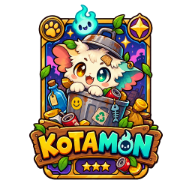
KOTAMON Card Art Guide: Rarities, Conditions, Collecting Tips, and Examples
Explore KOTAMON card art, from hand-drawn illustrations and foil finds to rarity, condition, collection rewards, and practical search tips.
Why KOTAMON Card Art Matters
A rare-looking card buried under bottles, toys, and cereal packaging is the reason KOTAMON turns a cleanup job into a visual treasure hunt. For anyone searching for KOTAMON card art, the appeal is not only the hand-drawn illustrations but also the combination of character design, rarity, condition, and discovery. This KOTAMON card art guide explains what the official game listing confirms, what a community demo shows in practice, and how to search more efficiently without relying on an unverified card catalog.
KOTAMON is built around a simple but unusual loop: clear garbage, uncover objects, find collectible cards, and improve your equipment. The cards give the otherwise repetitive work a clear purpose. Every pile can potentially contain a new illustration, a damaged card worth repairing, or an especially valuable foil find.
The available official information does not provide a complete card checklist, exact drop rates, or a confirmed ranking of the most valuable characters. That distinction matters. The best way to discuss the art accurately is to separate confirmed features from player experience and community reports.
What Official Sources Confirm About KOTAMON Card Art
The official KOTAMON Steam store page describes the collection as dozens of unique cards featuring hand-drawn illustrations. It also identifies several systems connected to the cards, including color-based sets, foil cards, card repairs, and card swaps.
Those details make the artwork more than a decorative bonus. The card image is part of a collectible object with a condition, possible rarity, and gameplay value.
| Confirmed feature | What the official listing explains | Why it matters to collectors |
|---|---|---|
| Dozens of unique cards | KOTAMON includes a broad collection of individual cards | Players have a long-term discovery goal, even though the exact total is not specified |
| Hand-drawn illustrations | The cards use hand-drawn character artwork | Visual design is a central part of the collection rather than a minor menu feature |
| Color-based sets | Players can collect cards in different colors to earn rewards | A card may matter because it completes a set, not only because it looks rare |
| Super-rare foil cards | An unopened cereal box may contain a super-rare foil card | Cereal boxes can be especially exciting discoveries during a cleanup session |
| Variable condition | Cards can be crumpled, damaged, or torn into pieces | Finding a card is not always the end of the process |
| Repair and swapping | Players can mend cards or swap them for better ones | Condition and collection decisions are connected |
| Card value | The listing states that better-condition cards are more expensive | Repairing a damaged find may improve its usefulness or value |
The wording “dozens” is the most reliable quantity currently available in the supplied official material. It is better to use that description than to publish a precise number that has not been confirmed by the developer.
The official description also suggests a playful tone. KOTAMON presents its cards as collectible illustrations inside a comedic garbage-cleaning simulation, so the art exists within a deliberately strange setting. The contrast between discarded household objects and carefully designed character cards is part of the game’s identity.
How the Collection Loop Works
KOTAMON card art is encountered through several connected stages rather than through a conventional card gallery. You begin by working through a garbage pile, then decide what to do with each card once it becomes visible.
The game’s official description specifically mentions hidden cards, damaged cards, repairs, swaps, and rewards for completing color groups. That creates several reasons to keep searching even after finding a card that looks interesting.
| Collection stage | Player action | Art-related importance |
|---|---|---|
| Search | Clear a garbage pile and inspect newly exposed objects | Illustrations may remain hidden beneath ordinary debris |
| Recover | Pick up a card from the pile | The discovery itself becomes part of the collection experience |
| Inspect | Check the card’s appearance and available information | Players can compare designs, rarity indicators, and card details |
| Restore | Mend a crumpled, damaged, or torn card | Condition can affect how desirable or expensive the card becomes |
| Swap | Exchange a card for a better option when appropriate | Duplicate or lower-condition finds may still have a practical use |
| Group | Organize cards by color or collection goal | Completing sets can produce rewards beyond the individual card |
| Chase special finds | Look for unopened cereal boxes | A foil card may offer a rare alternative to ordinary discoveries |
This structure means the “best” card is not necessarily the one with the most attractive illustration. A card can be useful because it completes a color set, has better condition, provides a desirable effect, or fills a missing part of the collection.
For that reason, treat KOTAMON card art as a collection system with visual, mechanical, and economic layers. Looking only for the brightest or most unusual design could cause you to overlook a card that completes a valuable group.
What Condition Adds to the Artwork
Condition is one of the most distinctive parts of the card system. According to the official listing, cards may be crumpled, damaged, or split into pieces. The player can then mend them or exchange them for other cards.
That mechanic changes how players evaluate visual collectibles. A damaged card is not necessarily worthless, and a pristine illustration may not be the only thing that determines a card’s importance. If a card is part of a set, repairing it may be more useful than immediately swapping it.
The supplied material does not explain the exact repair costs, the number of repair stages, or the precise value increase for each condition level. Those details should be learned in-game rather than assumed from an unofficial checklist.
Player Experience: What a Demo Reveals
A community gameplay demo provides useful player experience, but it should not be treated as an official probability guide. The player worked through several garbage heaps and reported finding cards among common objects such as bottles, toys, electronic parts, packaging, and other discarded items.
The demo also showed that card information became visible after the player cleaned the finds. The displayed details included rarity-style labels, hit points, attack values, and special effect text. These observations support the idea that KOTAMON cards function as more than static art collectibles.
| Community observation | Source label | Practical takeaway |
|---|---|---|
| Cards appeared while ordinary garbage was being cleared | Player experience from a community demo | Search the full pile instead of focusing only on obvious treasure objects |
| Card information included rarity, HP, attack, and effects | Player experience from a community demo | Inspect each recovered card before deciding whether it is useful |
| A duplicate or previously seen card appeared during the demo | Community report | Do not assume every discovery will be unique |
| Bag capacity, energy, and collection speed could be upgraded | Player experience from a community demo | Equipment upgrades can make repeated card searches more efficient |
| Cards could sometimes be noticed on or near a pile before the area was finished | Community report | Scan exposed surfaces while working, but continue clearing before abandoning a pile |
| Carrying energy-restoring beer was useful during the demo | Player experience; beer consumption is also mentioned on Steam | Plan around energy management during longer searches |
The demo suggests that visibility is important. A card can be small compared with the surrounding debris, and the player sometimes had to look closely at the pile or climb onto it to identify a possible find. This is not evidence of a fixed spawn pattern, but it is a useful search habit.
The same demo showed the player finding more cards after making progress through a pile. That supports a cautious approach: do not decide that a heap is empty simply because its surface has no visible card. Continue removing debris and scan the newly exposed area.
The player also encountered cards with apparent pop-culture references and humorous effects. Because the transcript is community commentary rather than a developer card list, individual names and references should be treated as player observations, not as a definitive catalog of KOTAMON card art.
Practical Tips for Finding Better Cards
The following approach combines confirmed mechanics with observations from player experience. It does not promise a particular rarity or drop rate, since no official odds are provided.
1. Search in controlled passes
Work across a pile in sections instead of moving randomly. Clear one visible area, pause to scan the exposed ground, and then move to the next section. This makes small cards easier to spot and reduces the chance of overlooking a newly revealed edge.
2. Check the edges and top surfaces
The community demo showed cards becoming visible on or around garbage piles. Look at the top, outer edge, and recently cleared ground before moving away. A card partly covered by bottles or packaging may be easier to see after only a small amount of debris has been removed.
3. Improve the upgrade that matches your bottleneck
The player demo showed upgrades connected to bag capacity, energy, and collection speed. Choose based on what interrupts your search most often.
| Problem during a search | Upgrade priority to consider | Reason |
|---|---|---|
| The bag fills before the pile is cleared | Bag capacity | Fewer disposal trips can keep attention on the search area |
| Energy runs out quickly | Energy-related improvement | Longer uninterrupted searches may help with large piles |
| Clearing individual objects takes too long | Collection speed | Faster removal exposes more of the pile in the same session |
| You regularly miss small objects | No immediate upgrade; change your scan pattern | Better observation may solve the problem before spending resources |
| You find many damaged cards | Repair or swap decisions | Preserve cards that support a set before exchanging them |
This is a practical priority guide, not an official upgrade ranking. The best choice depends on how you play and how much of the pile remains when your resources run low.
4. Record more than the illustration
When you find a card, note its visible name, color, rarity label, condition, attack, HP, and effect. A simple spreadsheet or handwritten list can prevent unnecessary swaps and help identify duplicates.
A personal log is especially useful because the supplied official information does not include a complete public checklist. It can also help you distinguish a genuinely new card from a familiar illustration with different condition or statistics.
5. Treat unopened cereal boxes as special opportunities
The official listing identifies unopened cereal boxes as possible sources of super-rare foil cards. When one appears, it deserves more attention than an ordinary piece of trash. The source material does not state the exact chance of receiving a foil card, so do not assume every box contains one.
6. Consider condition before swapping
A damaged card may still be valuable to your collection if it completes a color group or represents an illustration you do not already own. Compare the card’s condition and collection role before exchanging it. The official repair and swap systems indicate that preserving or improving a card can be part of the intended loop.
What Makes the Visual Style Stand Out?
KOTAMON card art combines hand-drawn collectible illustrations with a colorful, comedic game world. The official Steam tags include terms such as “Colorful,” “Hand-drawn,” “Comic Book,” “Cute,” and “Comedy,” while the community demo described the game’s visuals as distinctive and noticed apparent references in some card designs.
That combination gives the collection a deliberately informal personality. The cards are not presented as a realistic sports catalog or a serious fantasy archive. They are discovered in trash, cleaned, repaired, and evaluated inside a game that treats the entire premise with humor.
| Visual question | Evidence-based answer | What players should expect |
|---|---|---|
| Are the cards illustrated? | Yes, the official listing describes hand-drawn illustrations | Expect character-focused designs rather than plain item cards |
| Is there a complete official gallery in the supplied material? | No complete gallery or checklist is provided | Use in-game discoveries and verified developer updates for cataloging |
| Are there different collection categories? | Yes, cards can belong to different color sets | Organize discoveries by color as well as by appearance |
| Can the physical state change? | Yes, cards may be crumpled, damaged, or torn | The same design may appear in different conditions |
| Are special formats available? | Yes, unopened cereal boxes may contain foil cards | Foil hunting is a distinct part of the collection loop |
| Is mature content present? | The Steam description warns that some card illustrations show revealing, tight, or sexualized poses | Review the official content description before purchasing or sharing artwork |
The official content description says the game’s characters are adults and that the base game has no sexual scenes or suggestive content, while some illustrations may use revealing clothing or sexual poses. Readers looking for KOTAMON card art should keep that boundary in mind when discussing or displaying the collection.
FAQ
What is KOTAMON card art?
KOTAMON card art refers to the hand-drawn collectible illustrations found while clearing garbage in KOTAMON. Cards can also have rarity, condition, statistics, effects, colors, and collection value.
How many cards are in KOTAMON?
The official game listing describes dozens of unique cards, but the supplied material does not confirm an exact total. It also does not provide a complete public checklist or official drop-rate table.
Can KOTAMON cards be damaged?
Yes. The official description says cards can be crumpled, damaged, or torn into pieces. Players can mend cards or swap them, and better-condition cards are described as more expensive.
Does KOTAMON include rare foil cards?
Yes. The official listing says an unopened cereal box can contain a super-rare foil card. However, no confirmed odds are provided, so players should treat each box as a potential special find rather than a guaranteed reward.
Related Guides
KOTAMON all art guide: Every confirmed card detail and how to find rare designs
KOTAMON all art guide covering confirmed card designs, color sets, foil finds, card condition, collection tips, and catalog limits.
KOTAMON Art Guide: How Hand-Drawn Cards, Condition, and Sets Shape Collecting
Explore KOTAMON art, hand-drawn cards, foil finds, card condition, color sets, and practical collecting tips from official game details.
KOTAMON Artist: What Is Known About the Game's Art
Looking for the KOTAMON artist? Learn what the public game listing confirms about KotaMota Games, the art attribution, and how to verify individual credits.
KOTAMON game artist: Card Art, Credits, Visual Style, and Collector Tips
Looking for the KOTAMON game artist? Learn what the official listing confirms about card art, credits, visual style, and collecting tips.