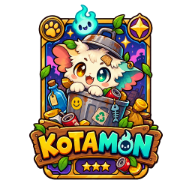
KOTAMON game artist: Card Art, Credits, Visual Style, and Collector Tips
Looking for the KOTAMON game artist? Learn what the official listing confirms about card art, credits, visual style, and collecting tips.
Quick answer: who is the KOTAMON game artist?
Searching for the KOTAMON game artist? The question matters because the hand-drawn trading cards are not just decoration: they shape the collection, condition, repair, and swapping loop in this indie simulation. If you are trying to identify the KOTAMON game artist, the available official information names KotaMota Games as the developer and Polnoch as the publisher, but it does not name an individual illustrator.
That is the most accurate answer supported by the available sources. The official Steam listing describes dozens of unique cards with hand-drawn illustrations, but it does not provide a personal artist credit, art-team roster, interview, or per-card attribution. The supplied player-facing material also contains no verified player experience or community reports identifying a specific illustrator.
| Credit or art question | What the relevant sources confirm | What remains unconfirmed |
|---|---|---|
| Individual artist | No named illustrator appears in the supplied listing | Artist name, portfolio, and individual card credits |
| Developer | KotaMota Games | Which team members worked on particular illustrations |
| Publisher | Polnoch | Whether the publisher handled any art production |
| Card-art style | Dozens of unique, hand-drawn illustrations | Medium, software, and production process |
| Artist count | The store description refers broadly to artists | A complete list of contributors |
For the “kotamon game artist” search, this distinction is important. KotaMota Games is a developer credit, not automatically the name of one artist. Unless an official credit later identifies a person, attaching a name to the card illustrations would be speculation.
What the card artwork does in KOTAMON
KOTAMON makes its collectible art part of the gameplay rather than treating it as a separate gallery feature. The player searches through garbage, discovers cards, builds sets, and evaluates whether damaged finds are worth repairing or exchanging.
The official description gives enough information to understand the card system, even though it does not reveal every collection detail. It confirms that the game includes dozens of unique cards, sets organized by different colors, and a chance to discover a super-rare foil card inside an unopened cereal box.
| Art feature | Confirmed game detail | Practical significance |
|---|---|---|
| Hand-drawn illustrations | Cards feature unique hand-drawn artwork | Visual variety is part of the collection appeal |
| Color-based sets | Players can collect sets of different colors for rewards | Tracking missing colors can guide future searches |
| Foil discovery | An unopened cereal box may contain a super-rare foil card | Rare finds add excitement to ordinary sorting |
| Damaged cards | Cards can be crumpled, damaged, or torn into pieces | Condition affects how useful or valuable a find may be |
| Repair and exchange | Players can mend cards or swap them for better ones | A damaged card can become a decision rather than an automatic loss |
The description also states that cards in better condition are more expensive. However, the available sources do not publish repair costs, exchange odds, a complete rarity chart, or an exact pricing formula. That means players should avoid assuming that every rare card has the same value or that every repair is automatically worthwhile.
The store copy uses enthusiastic promotional language about the people behind the illustrations, but that wording is not a formal credit list. For accurate attribution, treat the card art as hand-drawn work presented by KOTAMON’s developer unless an official source provides individual names.
Reading KOTAMON’s visual style without inventing credits
The KOTAMON game artist search can also reflect interest in the game’s visual identity rather than a request for a person’s name. On Steam, popular user-defined tags describe the game with terms such as “Colorful,” “Cute,” “Hand-drawn,” “Comic Book,” “Atmospheric,” “3D,” and “First-Person.”
These are community-supplied metadata descriptors, not player experience or community reports about the illustrator. They can help set expectations, but they should not be treated as an official art manifesto or proof of authorship.
| Visual layer | Evidence in the relevant material | How to interpret it |
|---|---|---|
| Play space | The game is presented as a 3D, first-person simulation set around a dump site | Card collecting takes place inside an interactive environment |
| Card surface | The official description calls the illustrations hand-drawn | The cards have a deliberately illustrated collectible identity |
| Color and tone | Steam tags include Colorful, Cute, Comic Book, Comedy, and Atmospheric | These suggest a playful visual mood, but remain user-defined descriptors |
| Relaxed presentation | The description emphasizes an unhurried experience and casual garbage sorting | The art supports a low-pressure collecting loop |
| Mature imagery | Some card illustrations show adult characters in revealing or tight clothing or sexual poses | Players should review the developer’s content notice before playing |
This combination gives KOTAMON a clear contrast: the player works in a messy dump-site setting while searching for visually distinctive collectibles. The tension is not between realistic art and fantasy art, since the sources do not define a single medium or artist. Instead, it comes from the relationship between ordinary discarded objects and cards that may be rare, colorful, damaged, or valuable.
That is why the KOTAMON game artist question is best answered through both credits and design. The available credit information is limited, but the card system provides a well-defined way to discuss how the artwork functions.
A practical art-and-collection checklist
No supplied source includes a verified artist interview, player experience, or community report about the card illustrations. The following recommendations are therefore based on KOTAMON’s documented mechanics rather than claims about how other players have succeeded.
| Step | What to do | Why it helps | Avoid assuming |
|---|---|---|---|
| 1. Track colors | Make a personal note of the colors and cards you still need | Sets of different colors produce rewards | The exact number of cards in each set is not provided |
| 2. Inspect condition | Check whether a card is crumpled, damaged, or torn | Condition affects the stated price | The game’s repair cost or value formula is unknown |
| 3. Consider mending | Compare a damaged card’s collection value with the possibility of repairing it | A damaged card may still complete a set | Every repair will be profitable |
| 4. Evaluate swaps | Use the exchange option when a different card better supports your collection goal | Swapping can improve the quality or usefulness of a collection | Swap results or odds are not disclosed |
| 5. Search unopened boxes | Pay attention to unopened cereal boxes during garbage runs | They can contain a super-rare foil card | A foil card is not guaranteed |
| 6. Combine objectives | Look for hidden treasures and complete dump-site orders while collecting | One trip can support collection, money, and progression goals | Exact payouts are not listed |
| 7. Study official media | Compare the Steam screenshots and gameplay trailer with the cards you find | This helps you examine presentation without guessing credits | Similar-looking art does not prove a shared artist |
Consider a simple decision example. If you discover a torn card that completes a needed color set, repairing it may be more useful than immediately exchanging it. If your goal is card value rather than set completion, the game’s stated condition premium makes a better-condition card more attractive.
This is a planning framework, not a guaranteed optimization strategy. KOTAMON’s available description does not explain the full economy, so keep notes about your own results instead of assuming that rarity, condition, and set rewards always interact in the same way.
If you arrived through the “kotamon game artist” query, screenshots can also help you describe the art accurately. Focus on observable details such as hand-drawn presentation, color grouping, foil treatment, and visible condition. Do not use visual similarity alone to assign the work to a specific illustrator.
Verified KOTAMON facts and the best source to check
For the most reliable game information, consult the official KOTAMON Steam page. It identifies the developer and publisher, describes the card mechanics, and includes the game’s trailer and screenshots.
The following snapshot places the art question in context:
| Detail | Verified information from the supplied sources | Relevance to the art question |
|---|---|---|
| Developer | KotaMota Games | Confirms the studio behind the game, not an individual artist |
| Publisher | Polnoch | Confirms the publishing credit |
| Release date | August 20, 2026 | Dates the available listing information |
| Platform | PC, with Windows system requirements | Identifies the supported release platform |
| Steam Deck | Compatibility is marked “Playable” | Provides another way to experience the collection |
| Genre | Indie and simulation | Explains the mix of collecting and first-person work |
| Core format | Single-player | The card hunt is presented as an individual activity |
| Collection size | Dozens of unique hand-drawn cards | Establishes the scale of the art-focused system |
| Achievements | 40 Steam Achievements | Adds a separate progression target |
| Review snapshot | The headline listing shows 93% positive from 44 user reviews | Indicates reception at collection time, not artist attribution |
The review percentage and count should be treated as a dated snapshot because store review totals can change. They also represent overall reception, not player experience specifically about the artwork or artist credits.
The KOTAMON game artist question may eventually receive a more specific answer if the developer publishes additional credits. Until then, the official studio credit and the documented hand-drawn card description are the strongest claims available.
FAQ: KOTAMON game artist questions
Who is the KOTAMON game artist?
The supplied relevant sources do not name an individual KOTAMON game artist. They credit KotaMota Games as the developer and Polnoch as the publisher, while describing the cards as hand-drawn illustrations. A personal artist name or per-card attribution is not confirmed.
What kind of art does KOTAMON use?
KOTAMON features dozens of unique trading cards with hand-drawn illustrations. The cards are grouped into sets by color, and the game can also generate a rare foil-card discovery through an unopened cereal box. Steam’s user-defined tags describe the presentation with terms including Colorful, Cute, Hand-drawn, Comic Book, and 3D.
Does the artwork affect gameplay?
Yes. Card art is connected to collecting, color-based sets, condition, and value. Cards may be crumpled, damaged, or torn, and players can mend or swap them. The official description also states that cards in better condition are more expensive, although it does not provide the complete pricing formula.
Does KOTAMON include mature card artwork?
The developer’s content description says that some card illustrations depict adult characters in revealing or tight clothing and sexual poses. It also states that the game has no sexual scenes or suggestive content, includes no full nudity, and allows optional beer consumption. Players who are sensitive to mature imagery should review the content notice before playing.
Related Guides
KOTAMON all art guide: Every confirmed card detail and how to find rare designs
KOTAMON all art guide covering confirmed card designs, color sets, foil finds, card condition, collection tips, and catalog limits.
KOTAMON Art Guide: How Hand-Drawn Cards, Condition, and Sets Shape Collecting
Explore KOTAMON art, hand-drawn cards, foil finds, card condition, color sets, and practical collecting tips from official game details.
KOTAMON Artist: What Is Known About the Game's Art
Looking for the KOTAMON artist? Learn what the public game listing confirms about KotaMota Games, the art attribution, and how to verify individual credits.
KOTAMON Card Art Guide: Rarities, Conditions, Collecting Tips, and Examples
Explore KOTAMON card art, from hand-drawn illustrations and foil finds to rarity, condition, collection rewards, and practical search tips.